 Thales Maciel
287f6d100f
Thales Maciel
287f6d100f
Finish the 3.1.0 secondary disk-tools milestone so stable workspaces can be
stopped, inspected offline, exported as raw ext4 images, and started again
without changing the primary workspace-first interaction model.

Add workspace stop/start plus workspace disk export/list/read across the CLI,
SDK, and MCP, backed by a new offline debugfs inspection helper and guest-only
validation. Scrub runtime-only guest state before disk inspection/export, and
fix the real guest reliability gaps by flushing the filesystem on stop and
removing stale Firecracker socket files before restart.

Update the docs, examples, changelog, and roadmap to mark 3.1.0 done, and
cover the new lifecycle/disk paths with API, CLI, manager, contract, and
package-surface tests.

Validation: uv lock; UV_CACHE_DIR=.uv-cache make check; UV_CACHE_DIR=.uv-cache
make dist-check; real guest-backed smoke for create, shell/service activity,
stop, workspace disk list/read/export, start, exec, and delete.
22 KiB
pyro-mcp
pyro-mcp is a stable agent workspace product for one-shot commands and persistent work inside ephemeral Firecracker microVMs using curated Linux environments such as debian:12.

This is for coding agents, MCP clients, and developers who want isolated command execution and stable disposable workspaces in ephemeral microVMs.
It exposes the same runtime in three public forms:
- the
pyroCLI - the Python SDK via
from pyro_mcp import Pyro - an MCP server so LLM clients can call VM tools directly
Start Here
- Install: docs/install.md
- Vision: docs/vision.md
- Workspace roadmap: docs/roadmap/task-workspace-ga.md
- First run transcript: docs/first-run.md
- Stable workspace walkthrough GIF: docs/assets/workspace-first-run.gif
- Terminal walkthrough GIF: docs/assets/first-run.gif
- PyPI package: pypi.org/project/pyro-mcp
- What's new in 3.1.0: CHANGELOG.md#310
- Host requirements: docs/host-requirements.md
- Integration targets: docs/integrations.md
- Public contract: docs/public-contract.md
- Troubleshooting: docs/troubleshooting.md
- Changelog: CHANGELOG.md


Quickstart
Use either of these equivalent quickstart paths:
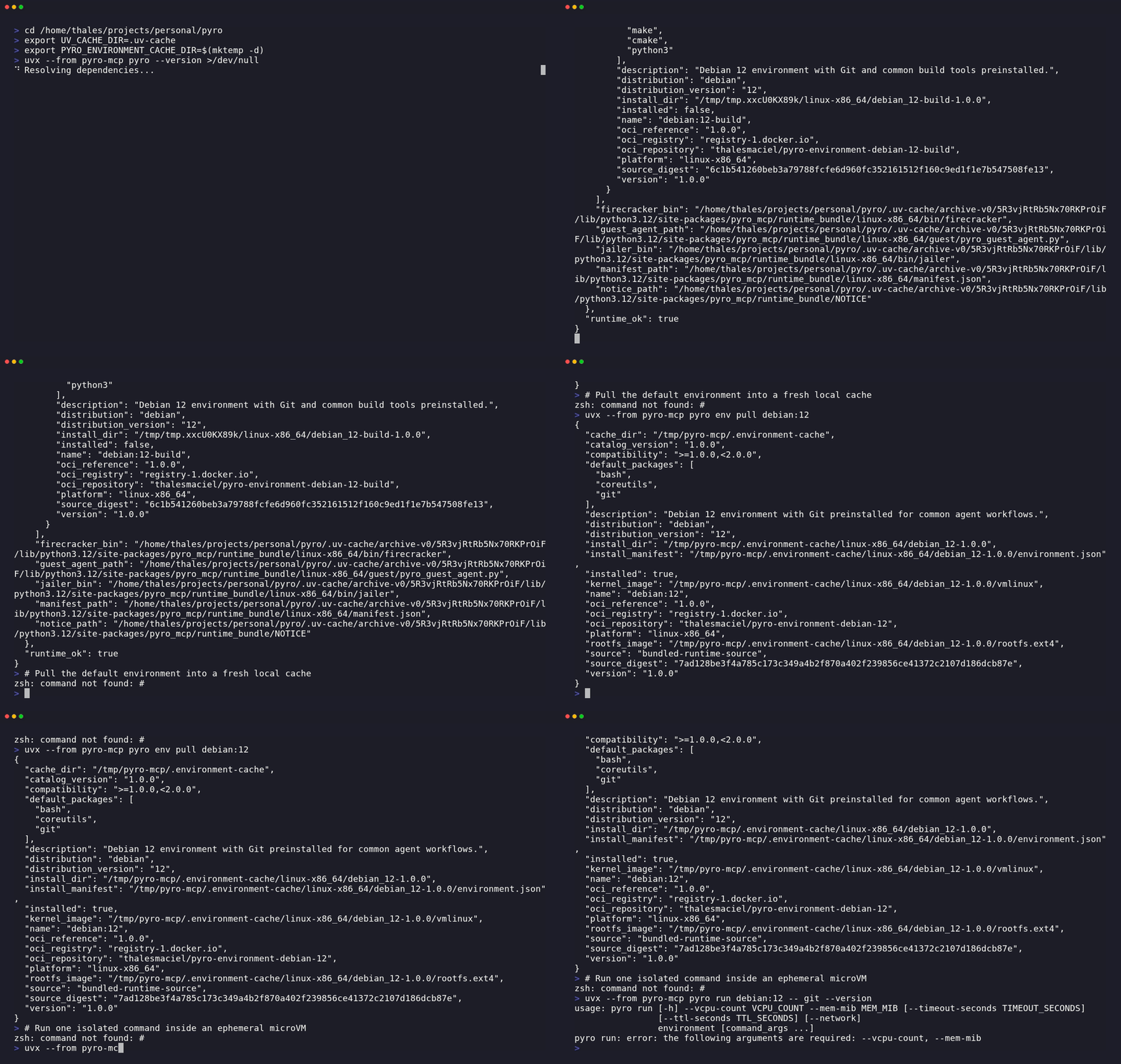
# Package without install
python -m pip install uv
uvx --from pyro-mcp pyro doctor
uvx --from pyro-mcp pyro env list
uvx --from pyro-mcp pyro env pull debian:12
uvx --from pyro-mcp pyro run debian:12 -- git --version
# Already installed
pyro doctor
pyro env list
pyro env pull debian:12
pyro run debian:12 -- git --version
From a repo checkout, replace pyro with uv run pyro.
What success looks like:
Platform: linux-x86_64
Runtime: PASS
Catalog version: 3.1.0
...
[pull] phase=install environment=debian:12
[pull] phase=ready environment=debian:12
Pulled: debian:12
...
[run] phase=create environment=debian:12
[run] phase=start vm_id=...
[run] phase=execute vm_id=...
[run] environment=debian:12 execution_mode=guest_vsock exit_code=0 duration_ms=...
git version ...
The first pull downloads an OCI environment from public Docker Hub, requires outbound HTTPS
access to registry-1.docker.io, and needs local cache space for the guest image.
Stable Workspace Path
pyro run is the stable one-shot entrypoint. pyro workspace ... is the stable path when an
agent needs one sandbox to stay alive across repeated commands, shells, services, checkpoints,
diffs, exports, and reset.
The commands below use plain pyro .... Run the same flow with uvx --from pyro-mcp pyro ...
for the published package, or uv run pyro ... from a source checkout.
uv tool install pyro-mcp
WORKSPACE_ID="$(pyro workspace create debian:12 --seed-path ./repo --json | python -c 'import json,sys; print(json.load(sys.stdin)["workspace_id"])')"
pyro workspace sync push "$WORKSPACE_ID" ./changes
pyro workspace exec "$WORKSPACE_ID" -- cat note.txt
pyro workspace snapshot create "$WORKSPACE_ID" checkpoint
pyro workspace service start "$WORKSPACE_ID" web --ready-file .web-ready -- sh -lc 'touch .web-ready && while true; do sleep 60; done'
pyro workspace reset "$WORKSPACE_ID" --snapshot checkpoint
pyro workspace export "$WORKSPACE_ID" note.txt --output ./note.txt
pyro workspace delete "$WORKSPACE_ID"
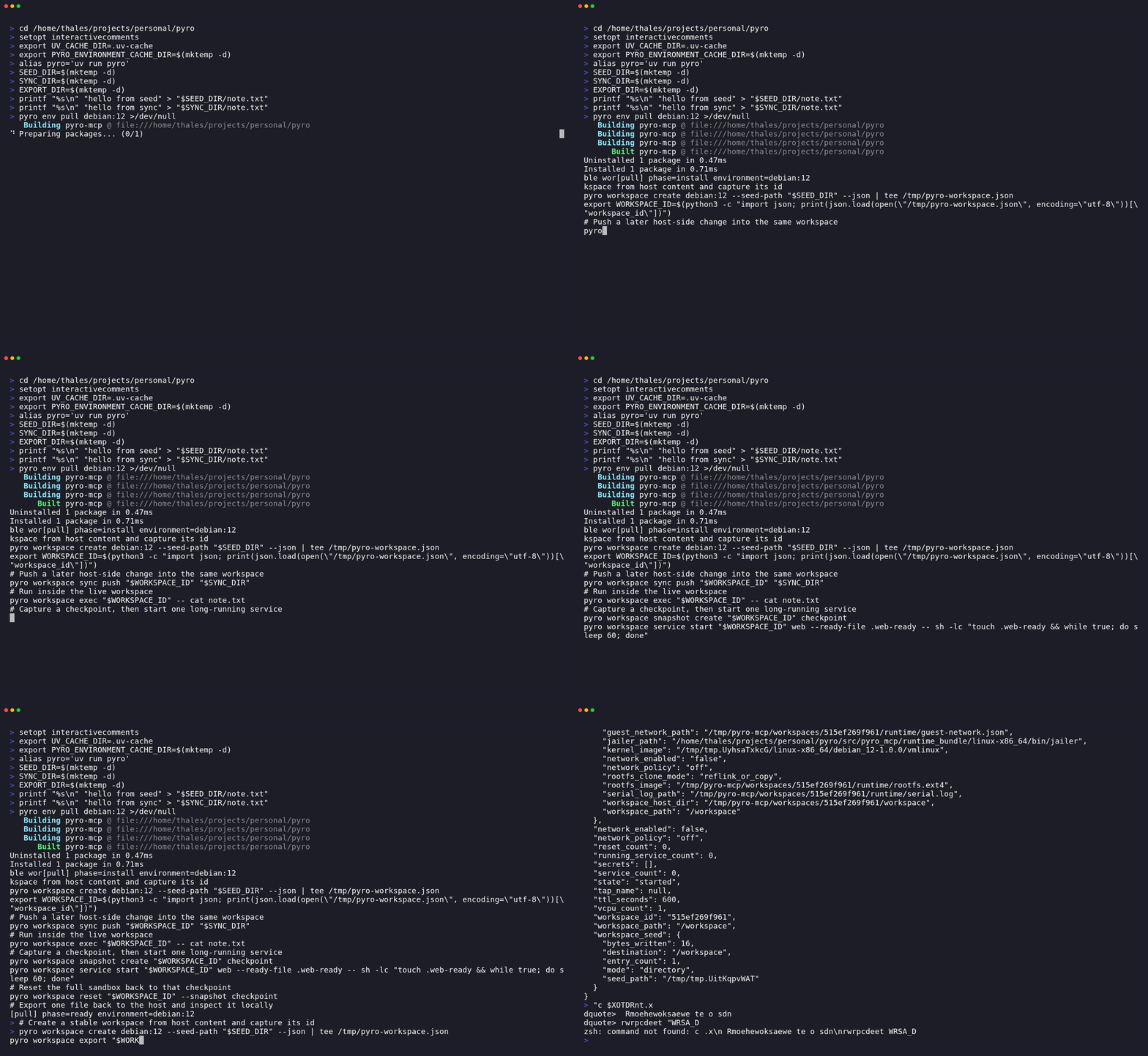
That stable workspace path gives you:
- initial host-in seeding with
--seed-path - later host-in updates with
workspace sync push - one-shot commands with
workspace execand persistent PTYs withworkspace shell * - long-running processes with
workspace service * - explicit checkpoints with
workspace snapshot * - full-sandbox recovery with
workspace reset - baseline comparison with
workspace diff - explicit host-out export with
workspace export - secondary stopped-workspace disk inspection with
workspace stop|startandworkspace disk *
After the quickstart works:
- prove the full one-shot lifecycle with
uvx --from pyro-mcp pyro demo - create a persistent workspace with
uvx --from pyro-mcp pyro workspace create debian:12 --seed-path ./repo - update a live workspace from the host with
uvx --from pyro-mcp pyro workspace sync push WORKSPACE_ID ./changes - enable outbound guest networking for one workspace with
uvx --from pyro-mcp pyro workspace create debian:12 --network-policy egress - add literal or file-backed secrets with
uvx --from pyro-mcp pyro workspace create debian:12 --secret API_TOKEN=expected --secret-file PIP_TOKEN=./token.txt - map one persisted secret into one exec, shell, or service call with
--secret-env API_TOKEN - diff the live workspace against its create-time baseline with
uvx --from pyro-mcp pyro workspace diff WORKSPACE_ID - capture a checkpoint with
uvx --from pyro-mcp pyro workspace snapshot create WORKSPACE_ID checkpoint - reset a broken workspace with
uvx --from pyro-mcp pyro workspace reset WORKSPACE_ID --snapshot checkpoint - export a changed file or directory with
uvx --from pyro-mcp pyro workspace export WORKSPACE_ID note.txt --output ./note.txt - open a persistent interactive shell with
uvx --from pyro-mcp pyro workspace shell open WORKSPACE_ID - start long-running workspace services with
uvx --from pyro-mcp pyro workspace service start WORKSPACE_ID app --ready-file .ready -- sh -lc 'touch .ready && while true; do sleep 60; done' - publish one guest service port to the host with
uvx --from pyro-mcp pyro workspace create debian:12 --network-policy egress+published-portsanduvx --from pyro-mcp pyro workspace service start WORKSPACE_ID app --ready-http http://127.0.0.1:8080/ --publish 18080:8080 -- ./start-app - stop a workspace for offline inspection with
uvx --from pyro-mcp pyro workspace stop WORKSPACE_ID - inspect or export one stopped guest rootfs with
uvx --from pyro-mcp pyro workspace disk list WORKSPACE_ID,uvx --from pyro-mcp pyro workspace disk read WORKSPACE_ID note.txt, anduvx --from pyro-mcp pyro workspace disk export WORKSPACE_ID --output ./workspace.ext4 - move to Python or MCP via docs/integrations.md
Supported Hosts
Supported today:
- Linux x86_64
- Python 3.12+
uv/dev/kvm
Optional for outbound guest networking:
ipnftoriptables- privilege to create TAP devices and configure NAT
Not supported today:
- macOS
- Windows
- Linux hosts without working KVM at
/dev/kvm
Detailed Walkthrough
If you want the expanded version of the canonical quickstart, use the step-by-step flow below.
1. Check the host
uvx --from pyro-mcp pyro doctor
Expected success signals:
Platform: linux-x86_64
Runtime: PASS
KVM: exists=yes readable=yes writable=yes
Environment cache: /home/you/.cache/pyro-mcp/environments
Capabilities: vm_boot=yes guest_exec=yes guest_network=yes
Networking: tun=yes ip_forward=yes
2. Inspect the catalog
uvx --from pyro-mcp pyro env list
Expected output:
Catalog version: 3.1.0
debian:12 [installed|not installed] Debian 12 environment with Git preinstalled for common agent workflows.
debian:12-base [installed|not installed] Minimal Debian 12 environment for shell and core Unix tooling.
debian:12-build [installed|not installed] Debian 12 environment with Git and common build tools preinstalled.
3. Pull the default environment
uvx --from pyro-mcp pyro env pull debian:12
The first pull downloads an OCI environment from public Docker Hub, requires outbound HTTPS
access to registry-1.docker.io, and needs local cache space for the guest image.
See docs/host-requirements.md for the full host requirements.
4. Run one command in a guest
uvx --from pyro-mcp pyro run debian:12 -- git --version
Expected success signals:
[run] environment=debian:12 execution_mode=guest_vsock exit_code=0 duration_ms=...
git version ...
The guest command output and the [run] ... summary are written to different streams, so they
may appear in either order in terminals or capture tools. Use --json if you need a
deterministic structured result.
5. Optional demos
uvx --from pyro-mcp pyro demo
uvx --from pyro-mcp pyro demo --network
pyro demo proves the one-shot create/start/exec/delete VM lifecycle works end to end.
Example output:
{
  "cleanup": {
    "deleted": true,
    "reason": "post_exec_cleanup",
    "vm_id": "..."
  },
  "command": "git --version",
  "environment": "debian:12",
  "execution_mode": "guest_vsock",
  "exit_code": 0,
  "stdout": "git version ...\n"
}
When you are done evaluating and want to remove stale cached environments, run pyro env prune.
If you prefer a fuller copy-pasteable transcript, see docs/first-run.md. The walkthrough GIF above was rendered from docs/assets/first-run.tape using scripts/render_tape.sh.
Stable Workspaces
Use pyro run for one-shot commands. Use pyro workspace ... when you need repeated commands in one
workspace without recreating the sandbox every time.
The project direction is an agent workspace, not a CI job runner. Persistent workspaces are meant to let an agent stay inside one bounded sandbox across multiple steps. See docs/vision.md for the product thesis and the longer-term interaction model.
pyro workspace create debian:12 --seed-path ./repo
pyro workspace create debian:12 --network-policy egress
pyro workspace create debian:12 --seed-path ./repo --secret API_TOKEN=expected
pyro workspace create debian:12 --network-policy egress+published-ports
pyro workspace sync push WORKSPACE_ID ./changes --dest src
pyro workspace exec WORKSPACE_ID -- cat src/note.txt
pyro workspace exec WORKSPACE_ID --secret-env API_TOKEN -- sh -lc 'test "$API_TOKEN" = "expected"'
pyro workspace diff WORKSPACE_ID
pyro workspace snapshot create WORKSPACE_ID checkpoint
pyro workspace reset WORKSPACE_ID --snapshot checkpoint
pyro workspace reset WORKSPACE_ID
pyro workspace export WORKSPACE_ID src/note.txt --output ./note.txt
pyro workspace shell open WORKSPACE_ID --secret-env API_TOKEN
pyro workspace shell write WORKSPACE_ID SHELL_ID --input 'pwd'
pyro workspace shell read WORKSPACE_ID SHELL_ID
pyro workspace shell close WORKSPACE_ID SHELL_ID
pyro workspace service start WORKSPACE_ID web --secret-env API_TOKEN --ready-file .web-ready -- sh -lc 'touch .web-ready && while true; do sleep 60; done'
pyro workspace service start WORKSPACE_ID worker --ready-file .worker-ready -- sh -lc 'touch .worker-ready && while true; do sleep 60; done'
pyro workspace service start WORKSPACE_ID app --ready-http http://127.0.0.1:8080/ --publish 18080:8080 -- ./start-app
pyro workspace service list WORKSPACE_ID
pyro workspace service status WORKSPACE_ID web
pyro workspace service logs WORKSPACE_ID web --tail-lines 50
pyro workspace service stop WORKSPACE_ID web
pyro workspace service stop WORKSPACE_ID worker
pyro workspace stop WORKSPACE_ID
pyro workspace disk list WORKSPACE_ID
pyro workspace disk read WORKSPACE_ID src/note.txt
pyro workspace disk export WORKSPACE_ID --output ./workspace.ext4
pyro workspace start WORKSPACE_ID
pyro workspace logs WORKSPACE_ID
pyro workspace delete WORKSPACE_ID
Persistent workspaces start in /workspace and keep command history until you delete them. For
machine consumption, add --json and read the returned workspace_id. Use --seed-path when
you want the workspace to start from a host directory or a local .tar / .tar.gz / .tgz
archive instead of an empty workspace. Use pyro workspace sync push when you want to import
later host-side changes into a started workspace. Sync is non-atomic in 3.1.0; if it fails
partway through, prefer pyro workspace reset to recover from baseline or one named snapshot.
Use pyro workspace diff to compare the live /workspace tree to its immutable create-time
baseline, and pyro workspace export to copy one changed file or directory back to the host. Use
pyro workspace snapshot * and pyro workspace reset when you want explicit checkpoints and
full-sandbox recovery. Use pyro workspace exec for one-shot
non-interactive commands inside a live workspace, and pyro workspace shell * when you need a
persistent PTY session that keeps interactive shell state between calls. Use
pyro workspace service * when the workspace needs one or more long-running background processes.
Typed readiness checks prefer --ready-file, --ready-tcp, or --ready-http; keep
--ready-command as the escape hatch. Service metadata and logs live outside /workspace, so the
internal service state does not appear in pyro workspace diff or pyro workspace export.
Use --network-policy egress when the workspace needs outbound guest networking, and
--network-policy egress+published-ports plus workspace service start --publish when one
service must be probed from the host on 127.0.0.1.
Use --secret and --secret-file at workspace creation when the sandbox needs private tokens or
config. Persisted secrets are materialized inside the guest at /run/pyro-secrets/<name>, and
--secret-env SECRET_NAME[=ENV_VAR] maps one secret into one exec, shell, or service call without
exposing the raw value in workspace status, logs, diffs, or exports. Use pyro workspace stop
plus pyro workspace disk list|read|export when you need offline inspection or one raw ext4 copy
from a stopped guest-backed workspace, then pyro workspace start to resume the same workspace.
Public Interfaces
The public user-facing interface is pyro and Pyro. After the CLI validation path works, you can choose one of three surfaces:
pyrofor direct CLI usage, including one-shotrunand persistentworkspaceworkflowsfrom pyro_mcp import Pyrofor Python orchestrationpyro mcp servefor MCP clients
Command forms:
- published package without install:
uvx --from pyro-mcp pyro ... - installed package:
pyro ... - source checkout:
uv run pyro ...
Makefile targets are contributor conveniences for this repository and are not the primary product UX.
Official Environments
Current official environments in the shipped catalog:
debian:12debian:12-basedebian:12-build
The package ships the embedded Firecracker runtime and a package-controlled environment catalog.
Official environments are pulled as OCI artifacts from public Docker Hub repositories into a local
cache on first use or through pyro env pull.
End users do not need registry credentials to pull or run official environments.
The default cache location is ~/.cache/pyro-mcp/environments; override it with
PYRO_ENVIRONMENT_CACHE_DIR.
CLI
List available environments:
pyro env list
Prefetch one environment:
pyro env pull debian:12
Run one command in an ephemeral VM:
pyro run debian:12 -- git --version
Run with outbound internet enabled:
pyro run debian:12 --network -- \
  'python3 -c "import urllib.request; print(urllib.request.urlopen(\"https://example.com\", timeout=10).status)"'
Show runtime and host diagnostics:
pyro doctor
pyro doctor --json
pyro run defaults to 1 vCPU / 1024 MiB.
It fails closed when guest boot or guest exec is unavailable.
Use --allow-host-compat only if you explicitly want host execution.
Run the MCP server after the CLI path above works:
pyro mcp serve
Run the deterministic demo:
pyro demo
pyro demo --network
Run the Ollama demo:
ollama serve
ollama pull llama3.2:3b
pyro demo ollama
Python SDK
from pyro_mcp import Pyro

pyro = Pyro()
result = pyro.run_in_vm(
    environment="debian:12",
    command="git --version",
    timeout_seconds=30,
    network=False,
)
print(result["stdout"])
Lower-level lifecycle control remains available:
from pyro_mcp import Pyro

pyro = Pyro()
created = pyro.create_vm(
    environment="debian:12",
    ttl_seconds=600,
    network=True,
)
vm_id = created["vm_id"]
pyro.start_vm(vm_id)
result = pyro.exec_vm(vm_id, command="git --version", timeout_seconds=30)
print(result["stdout"])
exec_vm() is a one-command auto-cleaning call. After it returns, the VM is already deleted.
Environment management is also available through the SDK:
from pyro_mcp import Pyro

pyro = Pyro()
print(pyro.list_environments())
print(pyro.inspect_environment("debian:12"))
For repeated commands in one workspace:
from pyro_mcp import Pyro

pyro = Pyro()
workspace = pyro.create_workspace(environment="debian:12", seed_path="./repo")
workspace_id = workspace["workspace_id"]
try:
    pyro.push_workspace_sync(workspace_id, "./changes", dest="src")
    result = pyro.exec_workspace(workspace_id, command="cat src/note.txt")
    print(result["stdout"], end="")
finally:
    pyro.delete_workspace(workspace_id)
MCP Tools
Primary agent-facing tool:
vm_run(environment, command, vcpu_count=1, mem_mib=1024, timeout_seconds=30, ttl_seconds=600, network=false, allow_host_compat=false)
Advanced lifecycle tools:
vm_list_environments()vm_create(environment, vcpu_count=1, mem_mib=1024, ttl_seconds=600, network=false, allow_host_compat=false)vm_start(vm_id)vm_exec(vm_id, command, timeout_seconds=30)auto-cleans the VM after that commandvm_stop(vm_id)vm_delete(vm_id)vm_status(vm_id)vm_network_info(vm_id)vm_reap_expired()
Persistent workspace tools:
workspace_create(environment, vcpu_count=1, mem_mib=1024, ttl_seconds=600, network_policy="off", allow_host_compat=false, seed_path=null, secrets=null)workspace_sync_push(workspace_id, source_path, dest="/workspace")workspace_exec(workspace_id, command, timeout_seconds=30, secret_env=null)workspace_export(workspace_id, path, output_path)workspace_diff(workspace_id)snapshot_create(workspace_id, snapshot_name)snapshot_list(workspace_id)snapshot_delete(workspace_id, snapshot_name)workspace_reset(workspace_id, snapshot="baseline")service_start(workspace_id, service_name, command, cwd="/workspace", readiness=null, ready_timeout_seconds=30, ready_interval_ms=500, secret_env=null, published_ports=null)service_list(workspace_id)service_status(workspace_id, service_name)service_logs(workspace_id, service_name, tail_lines=200)service_stop(workspace_id, service_name)shell_open(workspace_id, cwd="/workspace", cols=120, rows=30, secret_env=null)shell_read(workspace_id, shell_id, cursor=0, max_chars=65536)shell_write(workspace_id, shell_id, input, append_newline=true)shell_signal(workspace_id, shell_id, signal_name="INT")shell_close(workspace_id, shell_id)workspace_status(workspace_id)workspace_logs(workspace_id)workspace_delete(workspace_id)
Integration Examples
- Python one-shot SDK example: examples/python_run.py
- Python lifecycle example: examples/python_lifecycle.py
- Python workspace example: examples/python_workspace.py
- MCP client config example: examples/mcp_client_config.md
- Claude Desktop MCP config: examples/claude_desktop_mcp_config.json
- Cursor MCP config: examples/cursor_mcp_config.json
- OpenAI Responses API example: examples/openai_responses_vm_run.py
- LangChain wrapper example: examples/langchain_vm_run.py
- Agent-ready
vm_runexample: examples/agent_vm_run.py
Runtime
The package ships an embedded Linux x86_64 runtime payload with:
- Firecracker
- Jailer
- guest agent
- runtime manifest and diagnostics
No system Firecracker installation is required.
pyro installs curated environments into a local cache and reports their status through pyro env inspect and pyro doctor.
The public CLI is human-readable by default; add --json for structured output.
Contributor Workflow
For work inside this repository:
make help
make setup
make check
make dist-check
Contributor runtime sources live under runtime_sources/. The packaged runtime bundle under
src/pyro_mcp/runtime_bundle/ contains the embedded boot/runtime assets plus manifest metadata;
end-user environment installs pull OCI-published environments by default. Use
PYRO_RUNTIME_BUNDLE_DIR=build/runtime_bundle only when you are explicitly validating a locally
built contributor runtime bundle.
Official environment publication is performed locally against Docker Hub:
export DOCKERHUB_USERNAME='your-dockerhub-username'
export DOCKERHUB_TOKEN='your-dockerhub-token'
make runtime-materialize
make runtime-publish-official-environments-oci
make runtime-publish-environment-oci auto-exports the OCI layout for the selected
environment if it is missing.
The publisher accepts either DOCKERHUB_USERNAME and DOCKERHUB_TOKEN or
OCI_REGISTRY_USERNAME and OCI_REGISTRY_PASSWORD.
Docker Hub uploads are chunked by default for large rootfs layers; if you need to tune a slow
link, use PYRO_OCI_UPLOAD_TIMEOUT_SECONDS, PYRO_OCI_UPLOAD_CHUNK_SIZE_BYTES, and
PYRO_OCI_REQUEST_TIMEOUT_SECONDS.
For a local PyPI publish:
export TWINE_PASSWORD='pypi-...'
make pypi-publish
make pypi-publish defaults TWINE_USERNAME to __token__.
Set PYPI_REPOSITORY_URL=https://test.pypi.org/legacy/ to publish to TestPyPI instead.